

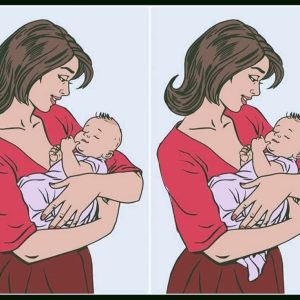
- Puzzles don’t always have to be complex to be tricky. Sometimes, the most powerful test of observation is a single, tiny detail. Today’s visual challenge features a loving mother holding her baby in two nearly identical illustrations. But only one thing is different—can you spot it?
This “spot the difference” puzzle is designed to make you slow down and look closely. Think you’re good at noticing small details? Let’s find out!
Why Spot-the-Difference Puzzles Are So Engaging

At first glance, both pictures look exactly the same: same mother, same baby, same pose, same colors. But there’s a small difference hidden in plain sight. This type of puzzle is great for exercising your brain’s ability to focus, scan visually, and process subtle changes quickly.
And while it might sound easy, most people struggle at first—especially when the change is minimal and not obvious.
Common Mistakes That Throw People Off
The reason many puzzle-solvers give up too early or choose the wrong answer is simple: they don’t take their time. Here are some frequent mistakes:
- Quickly scanning the image without comparing sections carefully
- Focusing only on the faces or hands, ignoring other areas like clothing or background
- Rushing to make a guess instead of methodically inspecting each detail
Most people are visually trained to look for differences in prominent features like faces or posture. That’s exactly why small background shifts or clothing changes are often overlooked.
The One Difference Between the Two Images
Before we dive into the solution process, here’s the answer in case you’re eager to know:
Video : 
 Spot the Difference Game | 3 Differences in 90 Seconds!
https://youtu.be/MauWEnV8zeg?si=gKueyshaqDFVEr23
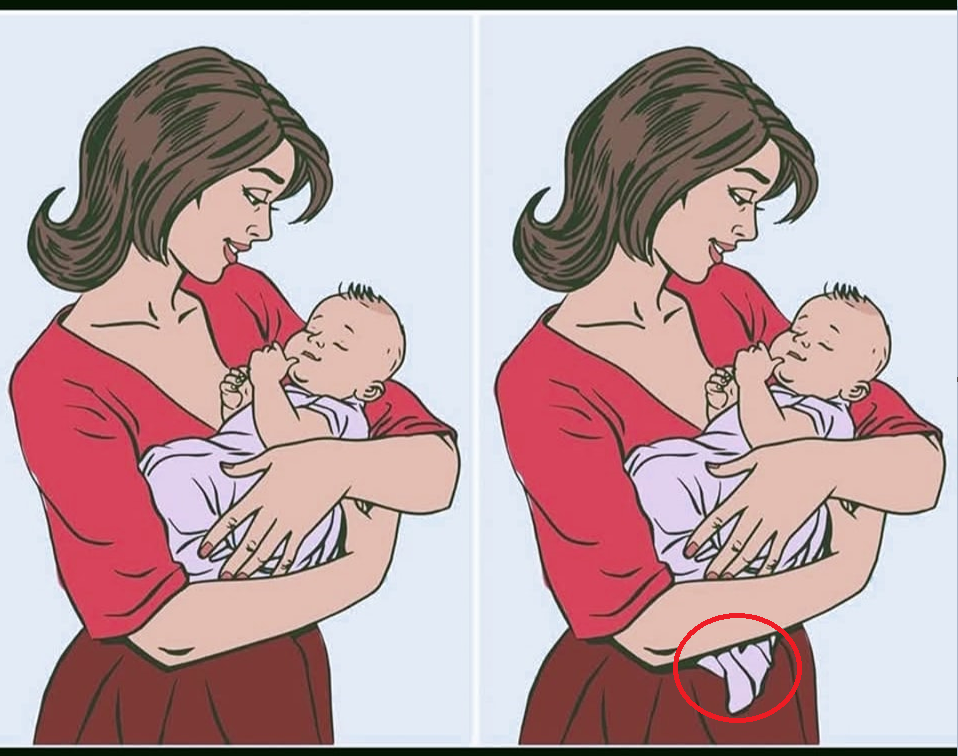
 The correct answer is the extra fold of the baby’s blanket visible under the mother’s arm in the right-hand image. That piece of fabric is not present in the left image. It’s a subtle but clear difference once you focus your attention on the bottom of the illustration.
How to Solve This Puzzle Step-by-Step
To help you develop a method for solving “spot the difference” puzzles effectively, let’s break this down using a strategic approach.
Step 1: Divide the image into zones
Start by mentally dividing each image into sections:
- Head and hair
- Face and eyes
- Arms and hands
- Baby’s body and blanket
- Clothing
- Background
This allows your brain to focus on smaller parts instead of trying to process the whole image at once.
Step 2: Compare each section one by one
Start from the top and work your way down. Are the hairstyles exactly the same? Is the baby’s head tilted the same way? Are the fingers placed identically?
Keep going through the arms, the blanket, and down to the clothing.
Step 3: Watch for pattern breaks
Often, these puzzles hide the difference in repeated patterns like folds in clothing, textures, or even color shades. This is where your attention to detail really matters.
Why These Details Matter in Puzzle Solving
This challenge is a great reminder that in life—and puzzles—details matter. It’s not always the most obvious thing that reveals the answer. Sometimes, what you overlook is exactly where the solution lies.
Puzzles like this help sharpen:
- Visual memory
- Attention to detail
- Patience and persistence
- Left and right brain coordination
It’s a great way to train your mind while having fun!
Test Yourself: Did You Find It Without Help?
Be honest—did you find the difference before reading the solution above? Or did your eyes skip past it a few times?
If you found it, congratulations! You’ve got sharp eyes and a focused brain.
If you didn’t, don’t worry. These puzzles are meant to be tricky. The more you practice, the faster and sharper you’ll become.
Video : 【Spot the difference】 10mins brain exercise!! Find the difference game for genius!!
Join the Fun: Share and Compare
Now that you know the correct answer, here’s what to do next:
- Share this puzzle with a friend or family member and challenge them to find the difference
- Comment below with how long it took you to find it
- Tag someone who claims to have eagle eyes and see how fast they can solve it
Conclusion: One Difference, One Big Brain Win
Solving puzzles like this isn’t just about fun—it’s a test of your observation skills and your ability to slow down in a fast-paced world. By finding that one small difference, you’ve exercised a part of your brain that helps with focus, memory, and even decision-making.
So next time someone says, “Can you spot the difference?”, you’ll know exactly what to do.
Keep training your brain—because every detail counts.