

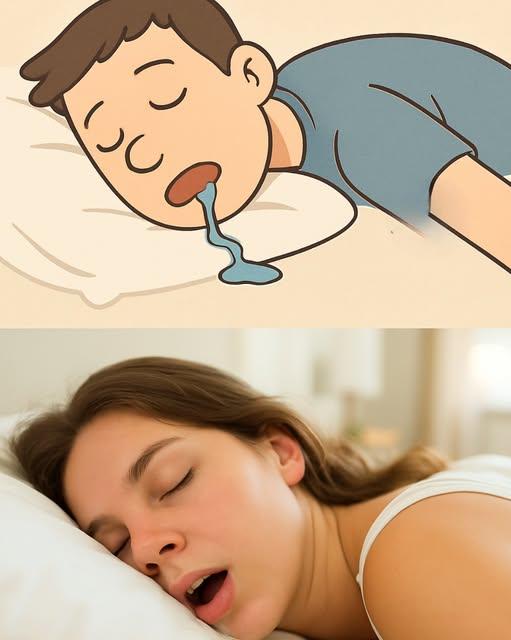
Drooling during sleep is common and usually harmless. It happens when saliva builds up and isn’t swallowed, often due to sleep position, relaxed muscles, or mouth breathing.
Sleeping on your side or stomach makes drooling more likely, as gravity allows saliva to flow outward. Deeper sleep stages also relax facial muscles, reducing the body’s ability to keep saliva in.
Other factors can contribute, including allergies, nasal congestion, or certain medications that affect saliva production or control. In most cases, occasional drooling is completely normal.
However, frequent or excessive drooling—especially with symptoms like choking, sore throat, or daytime fatigue—may point to conditions such as Sleep Apnea and should be evaluated by a professional.
Cultural views on drooling vary. Some see it as embarrassing or humorous, while others associate it with deep, restful sleep. In infants, it’s often linked to development and growth.
From a biological perspective, drooling can signal relaxation. Saliva supports digestion and oral health, and overflow during sleep may indicate the body feels safe enough to fully relax.
Psychologically, it may reflect comfort, trust, or reduced self-awareness during rest. Media often exaggerates drooling for humor, shaping how people perceive it socially.
Overall, drooling is a simple but meaningful bodily function, influenced by physical, cultural, and psychological factors, and rarely a cause for concern unless persistent or severe.