

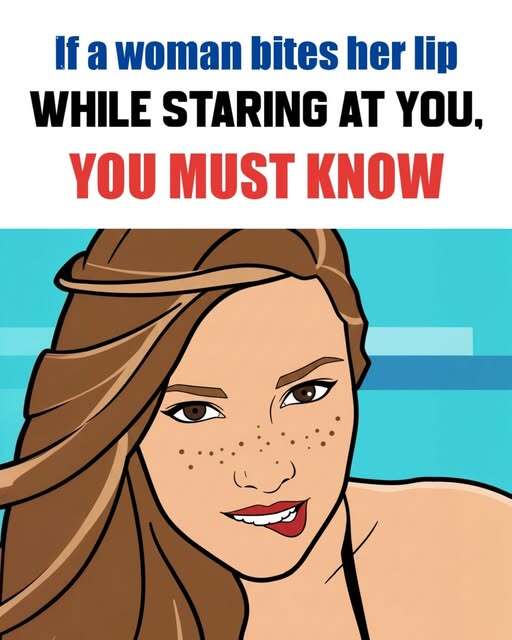
Lip biting is one of the most subtle yet expressive forms of body language, often noticed instantly because it draws attention to the lips and carries an emotional charge. While movies and social media frequently portray it as a clear sign of attraction or desire, the reality is far more nuanced. Its meaning depends heavily on context, accompanying behaviors, and the individual’s emotional state.
One of the most commonly assumed meanings of lip biting is romantic or physical attraction. When it occurs alongside prolonged eye contact, a soft smile, leaning in, or playful behavior, it can signal interest and emotional engagement. The gesture may unconsciously enhance the appearance of the lips, which are closely tied to intimacy and communication, making it a natural cue in flirtation.
However, lip biting is not always romantic. It is also a well-known self-soothing behavior linked to nervousness or emotional tension. In unfamiliar or stressful situations, people may bite their lips briefly as a way to manage anxiety or uncertainty. In these cases, it is usually paired with fidgeting, avoiding eye contact, or a more closed-off posture.
A third interpretation is playful or intentional flirting. Here, lip biting is slower and more deliberate, often combined with a smirk, steady eye contact, or teasing behavior. This version is more about creating social or romantic tension than expressing anxiety.
It is important to remember that lip biting alone is never enough to determine meaning. Factors such as tone of voice, body orientation, facial expressions, and repeated behavior must all be considered together.
In some cases, lip biting is simply a habit, a response to dry lips, or a sign of concentration unrelated to social interaction.
Ultimately, lip biting is a context-dependent gesture. Its meaning shifts based on situation and surrounding cues, making it a small but complex window into human emotion and behavior.