

For years, her family watched her gradually fade due to Alzheimer’s disease—not physically, but in memory, communication, and personality. At 80, she struggled to recognize loved ones, hold conversations, or recall much of her past.
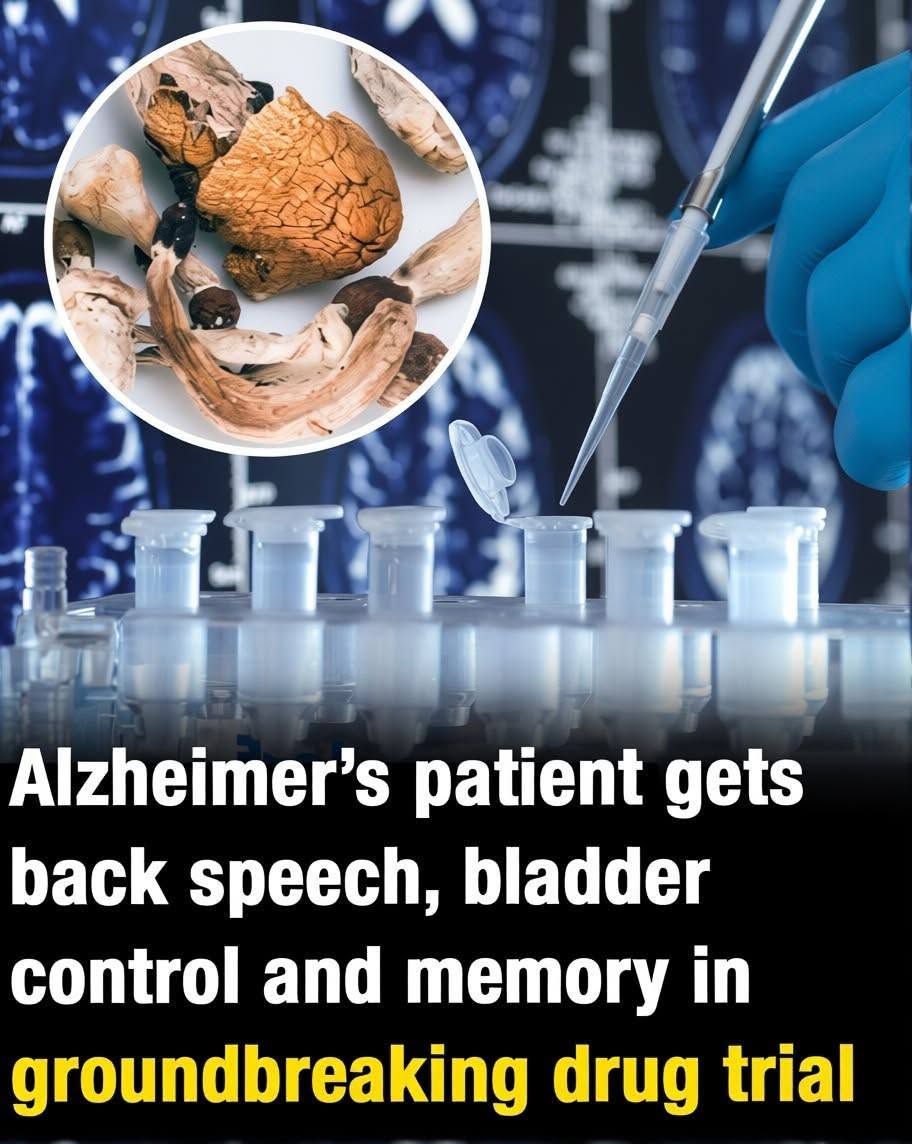
Then something unexpected occurred after she received an experimental treatment involving psilocybin, a psychedelic compound found in certain mushrooms. Hours later, she began speaking clearly again, recalling personal memories and detailed life stories that had seemed lost.
Researchers observing the case described the moment as striking. Her family was stunned as she recounted emotional and autobiographical experiences that had not surfaced in years.
The case has drawn scientific attention because it raises a key question in Alzheimer’s research: whether some memories are truly destroyed or simply inaccessible due to disrupted brain pathways.
Alzheimer’s disease is a progressive condition that affects memory, reasoning, and daily functioning. Despite extensive research, there is still no cure, only treatments that may slow symptoms in some cases.
In this study, the woman received a controlled dose of psilocybin under medical supervision. Initial reactions included agitation and a prolonged sleep-like state, but no immediate improvement.
Nearly a day later, she unexpectedly became highly verbal, recalling personal experiences and engaging in extended conversations. Researchers documented a noticeable temporary return of expressive abilities.
Some improvements in communication and engagement appeared to continue for a period afterward, but they were not permanent. Her underlying Alzheimer’s disease continued to progress.
Scientists caution that this is a single case and cannot prove effectiveness or a cure. However, it has sparked interest in whether some memories remain stored but temporarily inaccessible, and whether future therapies might help retrieve them.