

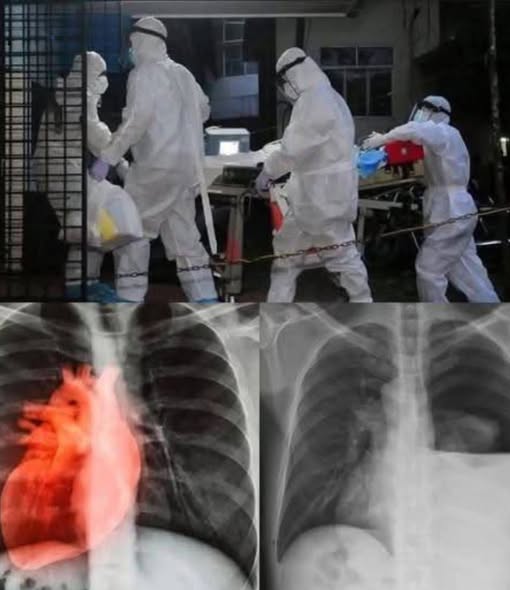
Researchers at Stanford Medicine have identified a possible biological explanation for why a small number of people develop myocarditis after mRNA COVID-19 vaccination.
Although this reaction remains rare, scientists continue to study it closely to better understand individual immune responses. Health authorities emphasize that mRNA vaccines are safe and effective for the vast majority of people.
In many cases, myocarditis linked to vaccination has been mild to moderate, with most patients recovering fully. Studies also show that COVID-19 infection itself can carry a higher risk of heart inflammation.
The research focused on immune system differences between individuals who developed myocarditis and those who did not after vaccination.
Two immune signaling molecules—CXCL10 and interferon-gamma—were identified as potential contributors to inflammation in rare cases.
Researchers observed that certain immune cells produced elevated CXCL10, which then interacted with T cells to increase interferon-gamma activity, amplifying inflammatory signals.
Laboratory and animal studies showed that blocking these pathways reduced inflammation while preserving broader immune function, suggesting a possible direction for future treatments.
Scientists stress that these findings are part of ongoing research aimed at improving vaccine safety and understanding rare side effects, not questioning the overall benefits of vaccination.