

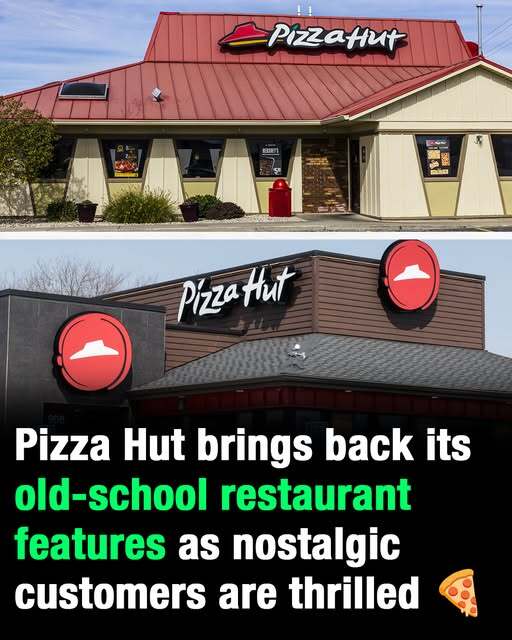
The first glimpse almost feels unreal. A glowing red roof rises against the night sky, instantly recognizable to anyone who grew up in the 1980s or 1990s. Inside, arcade machines hum softly in the corner while families slide into deep red booths beneath warm Tiffany-style lamps. Instead of staring silently at phones, people actually talk, laugh, and linger over pitchers of soda and baskets of pizza. In an era where many restaurant chains have embraced sterile minimalism and speed-focused convenience, these revived retro Pizza Hut locations feel like stepping through a doorway into another time entirely.
At the center of this unexpected nostalgia movement is Tim Sparks, a man determined to recreate more than just an old restaurant design. His goal is to restore a feeling millions of people thought had disappeared forever. Across the country, customers are driving long distances and even crossing state lines to experience restaurants that resemble the Pizza Huts they remember from childhood. The iconic red roofs, dim lighting, stained-glass-style lamps, salad bars, and arcade corners are all returning piece by piece.
For many visitors, the experience is emotional in ways they never expected. People are not simply ordering pizza; they are reconnecting with memories tied to simpler periods of their lives. Some remember birthday parties surrounded by friends and paper cups filled with soda. Others remember quiet weeknight dinners with parents, first dates, or family traditions that vanished as fast-food culture became increasingly rushed and digital. The retro restaurants revive an atmosphere where dining out once felt like an event rather than a transaction.
The contrast with modern restaurant culture is impossible to ignore. Today, many chains prioritize apps, kiosks, delivery systems, and quick turnover. Dining rooms often feel interchangeable, designed more for efficiency than personality. These restored Pizza Hut locations move in the opposite direction. They encourage people to slow down, sit together, and stay awhile. Red plastic cups, glowing arcade cabinets, and the familiar warmth of enclosed booths create a setting where nostalgia becomes almost tangible.
Parents visiting with their children often notice something surprising: kids willingly putting down phones to play arcade games like Pac-Man or simply engage with the people around them. Older couples quietly revisit memories from earlier chapters of their lives, reclaiming evenings that once revolved around conversation instead of screens and constant distractions. Some customers still hope the restaurants will fully revive the exact pizza recipes and buffet experiences they remember from decades ago, believing the food itself is part of the emotional connection.
Yet for many people, the true magic begins the moment they walk through the door. The glowing lamps, the familiar booths, and the unmistakable atmosphere instantly transport them backward in time. What makes these retro Pizza Hut revivals so powerful is not simply nostalgia for a brand, but nostalgia for a slower, more connected version of life itself. For a little while, inside those red-roofed dining rooms, it feels as though 1989 never really ended.