
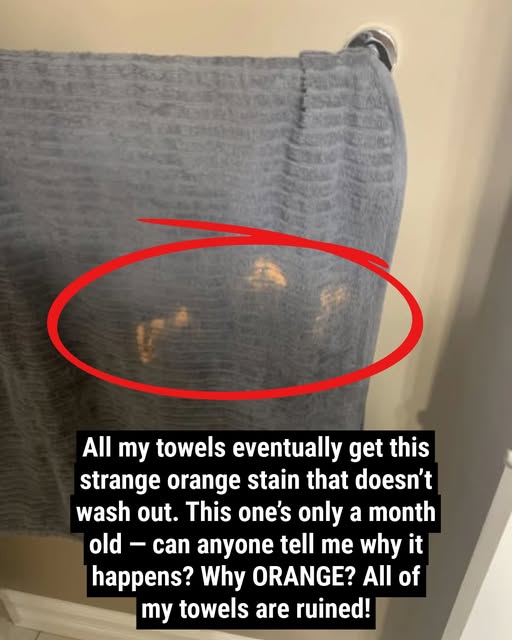
The First Clue
I remember the first time I spotted it — a strange, almost neon-orange blotch on my favorite grey hand towel. It didn’t look like a normal stain; it had a weird glow, like someone had taken a highlighter to it. I assumed it was rust from the towel bar or maybe a spill I’d forgotten about. I tossed it in the wash with extra detergent, confident it would come out. It didn’t.
Weeks later, more towels fell victim. My bathroom started to look like it had been attacked by a pumpkin spice poltergeist. If you’ve seen towels, pillowcases, or shirts develop stubborn orange spots, you’re not imagining things. The culprits are surprisingly common.
1. Benzoyl Peroxide — The Big Offender
The main cause? Benzoyl peroxide — a common ingredient in acne creams and cleansers. It doesn’t stain in the usual way. Instead, it bleaches the fabric’s dye, leaving behind an orange or yellowish patch. On dark towels, the contrast is even more obvious.
Once the color is stripped from the fibers, no amount of scrubbing or soaking will bring it back. My “aha” moment came when I realized the marks matched where my face and hands touched the towel after washing up at night. Even brief contact adds up over time.
2. Rust and Iron in Water
Not all orange marks are chemical burns from skincare. If you have iron-rich water — especially well water — it can leave rusty freckles on fabric. I learned this after visiting a friend in the countryside. Two washes later, my white towel was dotted with tiny orange specks.
The fix wasn’t more detergent, but a rust-removing laundry additive. It binds to iron before it settles into fabric.
3. Hair Products and Self-Tanners
Some hair products and self-tanners leave stubborn orange or brown stains, even when “dry” on skin or hair. Friction from drying transfers pigments onto towels. My clue? Faint orange marks on my hair towels despite never using self-tanner. Turns out my “warmth-enhancing” shampoo contained just enough pigment to do the damage.
4. Cleaning Products That Bleach
Bleach and hydrogen peroxide aren’t limited to laundry. They’re also in surface sprays, toilet cleaners, and disinfectant wipes. If you use them and wipe your hands on a towel, you may create bleach spots without realizing it.
A friend thought her washing machine was turning towels pink. In reality, she was cleaning with spray and then drying her hands on them.
How I Prevent It Now
Once I learned the causes, I treated towels like prized clothing:
- Use white towels for face care — Benzoyl peroxide stains won’t show.
- Wait for products to dry — Especially acne treatments or self-tanner.
- Use filtered water or rust remover — Stops mineral stains before they set.
- Keep a dedicated hair towel — Old towels catch pigment from shampoos and dyes.
Can You Fix the Damage?
If the mark comes from benzoyl peroxide or bleach, it’s permanent. Your options:
- Dye the entire towel a darker color.
- Repurpose it as a cleaning or hair towel.
- Bleach the whole towel for a uniform look.
Rust stains are trickier but possible to remove with fabric-safe rust removers. I’ve saved a few pillowcases this way.
Spotting the Difference
- Chemical bleaching leaves large, irregular patches where hands or face touch.
- Mineral staining appears as small, scattered dots.
Learning to read the “pattern” helps pinpoint the cause — and stop blaming a mysterious laundry curse.
Final Takeaway
I’m not stain-free — I still forget I’m wearing acne cream now and then — but my towel casualties have dropped from every few months to one every year or two. If your linens are turning orange, check your skincare, water quality, and hair care routine. Identify the culprit, protect the “danger zones,” and your towels will stay looking fresh much longer.