
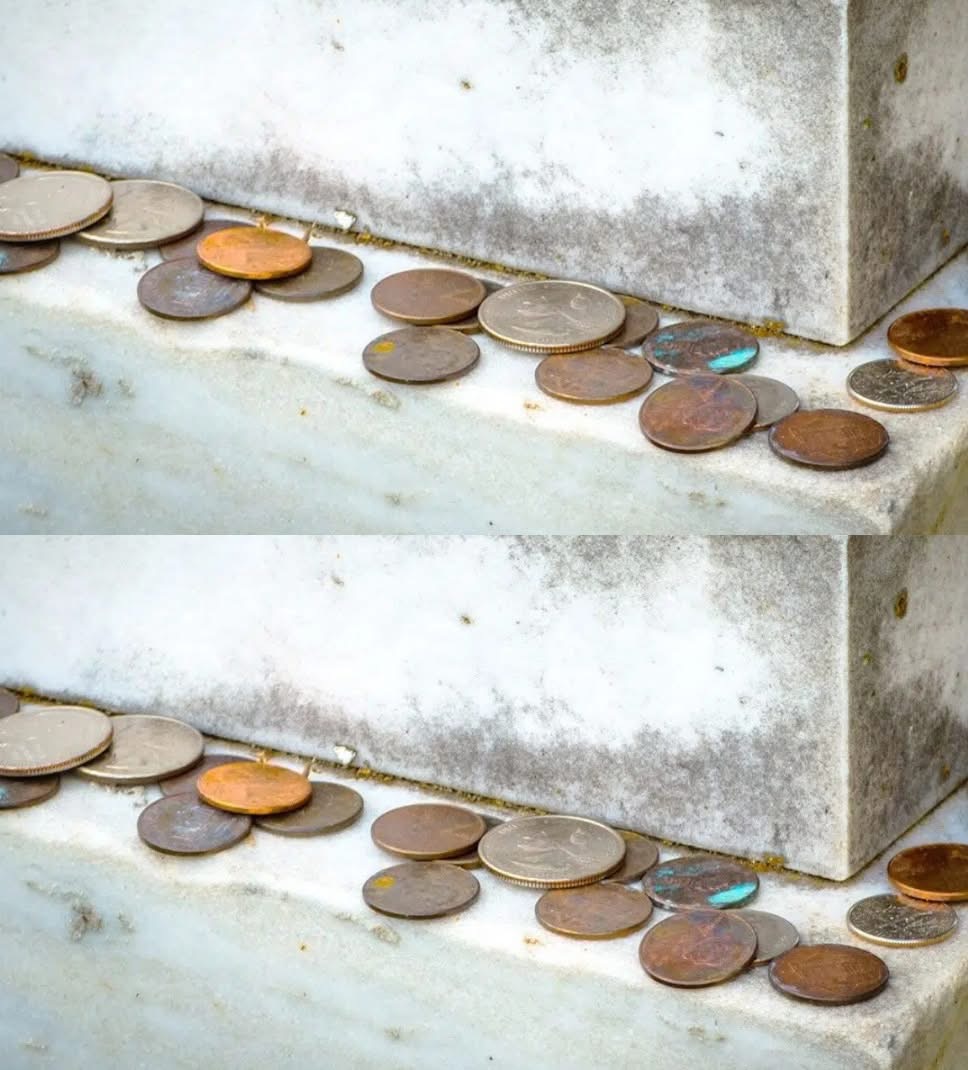
The Hidden Meaning Behind Coins on Military Gravestones
You may have walked through a cemetery and noticed a penny or two resting on a headstone—maybe even a dime or a quarter. At first glance, it might seem random, like someone emptied their pocket or visited on a whim. But in military cemeteries, those coins carry deep meaning.
These aren’t just dropped coins. Each one is placed with intention. And every denomination tells a different story.
A Quiet Tradition with Deep Roots
The practice of leaving coins on graves dates back centuries. Some trace its origins to ancient customs. Others point to the Vietnam War era, when many veterans wanted to quietly honor fallen comrades—without calling attention to themselves. So they left coins. No notes. No speeches. Just a silent message: I was here. I remember you.
Over time, this small gesture evolved. Even the type of coin left behind began to carry specific meaning.
Pennies: “I Remember You”
Pennies are the most common. Leaving one means you visited the grave. It’s a quiet nod of acknowledgment: You’re not forgotten. You may not have known the person, but your coin says you cared enough to stop. For grieving families, even one cent can feel like a thread of connection. Someone came. Someone remembered.
Nickels: “We Trained Together”
A nickel adds another layer. It means the visitor trained with the deceased—shared boot camp, sleepless nights, and the same frustrations over chow lines. They stood in formation together before the medals, before the missions. That nickel says, We started this journey side by side.
Dimes: “We Fought Together”
A dime speaks of a closer bond. It means the two served in combat together—on the same mission, in the same unit, maybe even in the same foxhole. It’s a token of shared hardship, stress, and survival. That dime says, I saw what you saw. I stood where you stood.
Quarters: “I Was There When You D**d”
A quarter carries the heaviest weight. It means the person who left it was there at the end. Maybe they tried to save the fallen soldier. Maybe they simply stood witness. Either way, the message is solemn and powerful: I was with you when it happened. You didn’t d*e alone.A Language Without Words
What makes this tradition so moving is its silence. There are no plaques explaining it. No announcements. You don’t need permission to participate. If you know, you know. And once you understand, you’ll never look at a coin on a gravestone the same way again.
Comfort for the Living
For families, finding coins can bring comfort. It’s evidence that someone remembered their loved one—even if they never learn who. The story doesn’t end with death. The memory continues, carried forward by strangers who also cared.
Why Coins—Not Flowers or Notes?
Coins don’t blow away. They hold value—both emotional and material. In some cemeteries, collected coins are even donated to veteran charities, giving them new life and purpose.
But most importantly, coins are symbolic. They may be small, but they carry weight. They represent presence. Respect. Memory.
Respect the Gesture
If you see a coin on a gravestone, leave it there. Don’t move it. Don’t take it. That coin wasn’t dropped—it was placed. Deliberately. Quietly. With meaning.
A Living Tradition
This is a tradition passed from one veteran to another, from generation to generation. You won’t find a sign explaining it. Just a few coins resting on stone—each one telling a story.
And now, you know how to read them.