
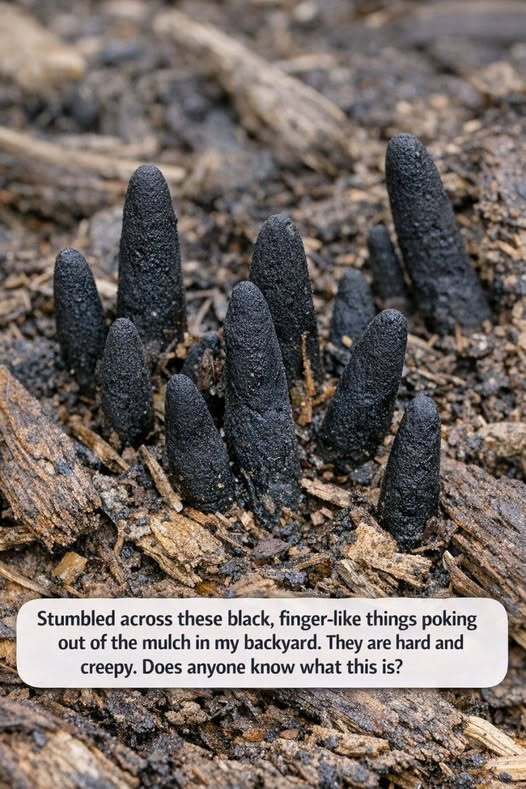
Discovering unusual growths in your backyard can be both unsettling and fascinating, particularly when black, finger-like structures emerge from mulch or soil. These eerie formations are often a type of fungus known as Dead Man’s Fingers (Xylaria polymorpha). Despite their macabre appearance, these fungi are harmless and play a beneficial role in breaking down decaying wood and enriching soil.
Typically, Dead Man’s Fingers appear as elongated, black or dark brown protrusions, growing up to three or four inches in length. When young, they may start pale or whitish, gradually hardening into a woody texture that adds to their spooky aesthetic. They often emerge from buried wood, tree stumps, or mulch beds, especially in shaded, damp areas, with seasonal growth peaking in spring and fall.
Identification relies on observing their distinct features: finger-like shape, smooth exterior, blackened mature surface, and white interior when cut open. While commonly mistaken for other fungi, such as Stinkhorns, or decaying plant roots, Dead Man’s Fingers can be distinguished by their structured growth and spore production.
Although their appearance can provoke alarm, these fungi are not dangerous to humans, pets, or plants. They do not parasitize living plants and are considered inedible due to their tough texture. Removal is optional; if desired for aesthetic reasons, carefully pulling the fungi along with any underlying decaying wood is sufficient. To prevent regrowth, reduce decomposing wood, maintain proper drainage, and consider mulch alternatives.
Encountering Dead Man’s Fingers provides a unique opportunity to explore mycology, encouraging curiosity about the vital role fungi play in ecosystems. Consulting experts, such as local extension services or mycologists, is recommended for uncertain or widespread growths. Embracing these strange yet fascinating organisms can deepen appreciation for the hidden life cycles beneath our yards.