
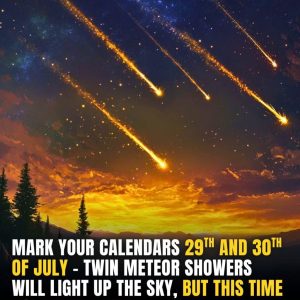
Double Meteor Shower Lights Up July Sky
This week offers a rare treat for sky-watchers as two meteor showers—Southern Delta Aquariids and Alpha Capricornids—peak together on the night of July 29 to early July 30.
Though best viewed from the Southern Hemisphere, those in the U.S. may still catch a glimpse. Southern Delta Aquariids can produce 15–20 meteors per hour, traveling at 25 miles per second, with about 10% leaving glowing trails.
Alpha Capricornids: Fewer, But Flashier
The Alpha Capricornids are slower and less frequent, averaging five meteors per hour, but are often more dramatic.
“They are these sort of slow fireballs across the sky,” said Nick Moskovitz of the Lowell Observatory. He added they might be “the one that gets you the most excited.” Despite their modest numbers, Thaddeus LaCoursiere of the Bell Museum notes, “when combined, these shooting stars do add up.”
Perseids: Bright, But Dimmed by the Moon
The Perseid meteor shower, known for producing 50–100 meteors per hour, will peak in mid-August. However, a bright moon will likely interfere. “The glare of the moon is really a killer,” said Moskovitz. This year, early viewing may be better while the moon is just 25% full.
Tips for Viewing
For the best experience, find a dark spot away from city lights and watch after midnight. Avoid using your phone so your eyes adjust to the dark. The American Meteor Society suggests waiting until the moon sets before watching the Alpha Capricornids. As Hunter Miller of the Adler Planetarium puts it, “Really, my biggest recommendation is to get to dark skies.”
READ MORE>>