
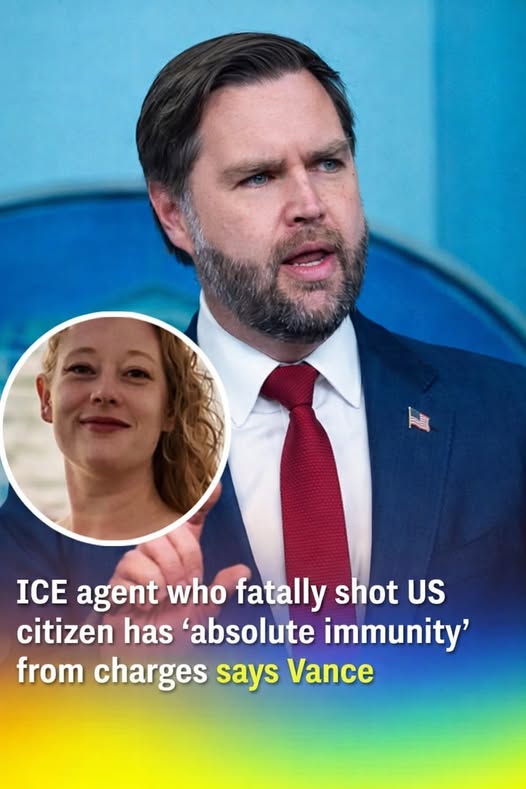
The shield went up before questions could begin. In a single statement, Vice President JD Vance declared the ICE agent who killed Renee Nicole Good protected by “absolute immunity,” instantly narrowing the path to accountability.
Minnesota officials were shut out. Evidence was seized, interviews restricted, and the FBI assumed full control of the investigation. State authorities were told to stand down, fueling frustration and suspicion.
As federal officials framed the incident as terrorism, local leaders pushed back. Minneapolis’s mayor labeled the shooting reckless, rejecting claims that it was a justified act of self-defense.
At the center of the dispute is Renee Nicole Good’s death, now more than a personal tragedy. It has become a collision point between federal power and state authority, with jurisdiction itself under scrutiny.
Vance’s assertion of immunity signals a sweeping claim: that federal agents, when acting under a badge, are beyond local oversight. For Minnesota investigators, this has meant being asked to trust a process they cannot see.
Dueling narratives deepen the divide. Federal agencies describe a “weaponized” vehicle and imminent danger. City leaders question whether force was necessary at all. Between these versions lies a family still waiting for clarity.
The lack of transparency has unsettled the public. When evidence is inaccessible and conclusions are announced early, confidence in the outcome erodes, regardless of what investigators ultimately find.
Whatever the final ruling, the case now stands as a broader test. It asks whether accountability can survive when the same government that investigates an incident also insists its agents can never be held to account.