
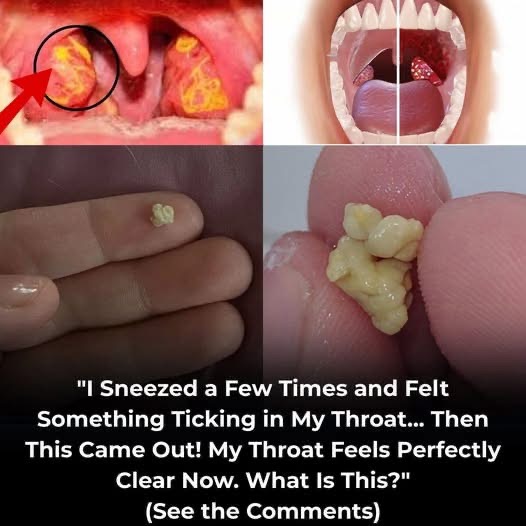
Tonsil stones, or tonsilloliths, are small, white or yellowish lumps that can form in the crypts (folds) of your tonsils.
Made from a buildup of dead cells, food debris, mucus, and bacteria,
these formations calcify over time, resulting in a gritty, foul-smelling lump often discovered unexpectedly — like after coughing or sneezing.
These stones typically look like small grains of rice or popcorn and often carry a strong odor due to sulfur-producing bacteria.
While many go unnoticed, larger ones can cause bad breath, sore throat,
difficulty swallowing, ear pain, and a sensation of something stuck in your throat.
People who have deep tonsil crypts, poor oral hygiene, chronic tonsillitis, post-nasal drip, or who mouth-breathe during sleep
are more prone to developing them.
Fortunately, in most cases, tonsil stones are harmless, though they can occasionally become painful or infected, requiring medical attention.
To remove tonsil stones, try gargling salt water, using a water flosser, or gently pressing with a cotton swab.
Avoid sharp or deep-reaching tools, as tonsils are sensitive. For persistent or large stones, medical treatments like antibiotics, laser cryptolysis, or even tonsillectomy may be needed.
While not entirely preventable, tonsil stones can be minimized through good oral hygiene, including brushing your teeth and tongue, flossing daily, using non-alcoholic mouthwash, drinking plenty of water, and using tongue scrapers or water flossers. Being aware of your tonsil structure and oral habits can go a long way in reducing occurrences.