
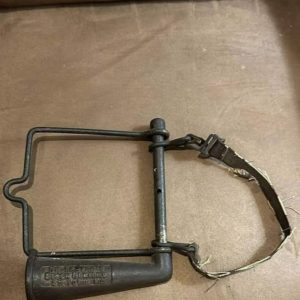
At first glance, it might look like a strange brass gadget with a leather strap. But don’t let its aged appearance fool you — this so-called “brass beauty” once played a life-saving role in the world of veterinary medicine. It’s called a horse drencher, and it was a go-to tool for administering medicine to sick horses long before high-tech equipment existed.
This artifact might not turn heads like a fancy gadget from a tech expo, but for anyone who cares about equine history or vintage craftsmanship, it’s a jaw-dropper. Let’s rewind the clock and explore what made this old-school device such a vital part of horse care.
The Birth of the Horse Drencher: Back When Simplicity Ruled
Before vets carried high-powered diagnostic tools and portable ultrasound machines, they had to work with what they had — and what they had was pretty brilliant.
The horse drencher dates back to a time when medicine was often homemade, and care was hands-on. This tool — usually made of solid brass with a fitted bit and a funnel — was designed to deliver liquid medicine directly into a horse’s mouth. Think of it like an oversized syringe but powered by gravity and grit.
Back then, conditions like colic could be deadly if not treated immediately. With the horse drencher, caretakers could pour a dose of medicine down a horse’s throat quickly and (relatively) safely. No injections. No high-pressure tech. Just clever design and careful handling.
Video: Drenching bit in Horse for Liquid medicine
The Drenching Bit: Where Design Met Function
One of the most clever parts of the horse drencher was the drenching bit — a metal piece inserted into the horse’s mouth to keep it open. This made it easier to guide liquid into the throat without risking a spill or a messy spit-back situation.
The funnel at the top allowed for controlled pouring, and many versions had a rope or leather strap to help keep the bit in place. By gently lifting the horse’s head and keeping the mouth open, caretakers could ensure the medicine went down the right way.
It wasn’t foolproof, but in the days before advanced tubing systems, it was a game-changer. Colic treatments, deworming liquids, and bitter tonics all got where they needed to go — even if the horse wasn’t exactly thrilled about it.
Crafted with Purpose: Brass and Leather That Lasted Decades
These tools weren’t churned out in factories by the thousands. Many were handcrafted with precision and care. Brass was the material of choice — durable, corrosion-resistant, and easy to clean. Paired with hand-stitched leather straps, these drenchers were built to last for years, if not generations.
Some antique examples still survive today, passed down through farming families or tucked into glass cases at rural museums. You’ll even find engraved initials or custom fittings, a sign that these weren’t just tools — they were prized possessions of people who deeply cared for their animals.
Every scratch and patina tells a story of long days in the field, cold barn nights, and hands-on animal care that demanded both strength and tenderness.
The Shift to Modern Tools: When Tubes Replaced Brass
Video: Drenching Gun in Horse
As veterinary medicine evolved in the 20th century, so did the gear. By the 1950s and ’60s, drencher tools were gradually phased out in favor of stomach tubes and oral syringes. These newer options allowed for more precise, less invasive treatment. They reduced stress on the animals and made dosing safer for both horse and handler.
The drencher, while effective, required restraint and force. Tubing, in contrast, offered more finesse and didn’t require prying open a horse’s jaw. Veterinarians embraced the shift — but they didn’t forget where it all started.
The horse drencher may have become obsolete, but it earned its retirement.
Why This Relic Still Matters Today
Even though the horse drencher isn’t used anymore, it holds a special place in the history of veterinary care. It represents a time when resourcefulness was everything. There weren’t labs around every corner or digital diagnostics at your fingertips — just a deep bond between people and their animals, and the will to help them heal.
It’s also a reminder that care doesn’t need to be high-tech to be effective. Sometimes, a simple design, some grit, and good instincts go a long way. That’s a message that resonates across generations.
Collectors and Historians Still Admire These Tools
Today, the antique horse drencher has taken on a new life as a collectible. Whether it’s displayed in a farmhouse, museum, or equestrian-themed study, it sparks curiosity. You don’t need to be a vet to appreciate the craftsmanship. You just need a respect for history and an eye for beautiful, purposeful design.
Many collectors hunt down these tools at estate sales or antique auctions. Some are in pristine condition, while others show years of use — and each one is a little different. That uniqueness adds to the magic.
Preserving the Past, Inspiring the Future
The horse drencher is more than a tool. It’s a symbol of the evolution of animal care. It bridges the gap between past and present — between old-school know-how and modern-day science. And in many ways, it challenges us to appreciate how far we’ve come, while still honoring where we began.
As technology continues to shape veterinary medicine, it’s artifacts like the drencher that remind us not to forget the human (and animal) side of the story. Behind every brass bit and worn leather strap was someone trying to ease a horse’s pain. That effort, that care — it’s timeless.
Conclusion: A Brass Beauty That Still Shines
So, can you identify this brass beauty now? It’s not just a relic — it’s a story. A story of farm life, of veterinary roots, of innovation born from necessity. The antique horse drencher might be retired, but its legacy lives on in every tool and treatment that followed.
Holding one in your hands is like holding a small piece of history — a quiet tribute to the people and animals who helped shape the world of equine care. And while it may never treat another horse, it still teaches us something: that compassion and creativity never go out of style.