
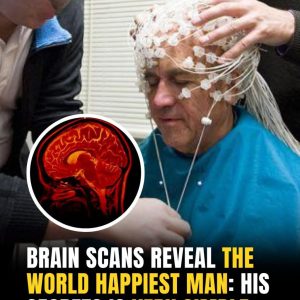
Brain Scans Reveal The World Happiest Man
Matthieu Ricard, once a molecular biologist in France, left a promising scientific career to become a Tibetan Buddhist monk. Now 78, Ricard is known for his serene presence and deep compassion — qualities that have made him a key figure in both spiritual and scientific communities.
The Science of Happiness
Ricard became the subject of a groundbreaking study at the University of Wisconsin–Madison, where scientists recorded his brain activity during meditation.
Using 256 sensors, researchers found that Ricard had unusually high levels of gamma waves — linked to learning and consciousness — and remarkable activity in the brain’s left prefrontal cortex, the area associated with happiness.
This supported the concept of neuroplasticity, proving that traits like joy and compassion can be developed over time. Ricard had spent more than 50,000 hours in meditation. “Happiness is not a constant euphoria,” he explained. “It’s a way of being that comes from inner peace and compassion.”
Meditation as Daily Practice
Ricard compares meditation to exercise: “Just as you would not expect to become fit by going to the gym once a month, you can’t expect to cultivate a serene mind without regular practice.” His teachings encourage consistent effort over time rather than instant results.