

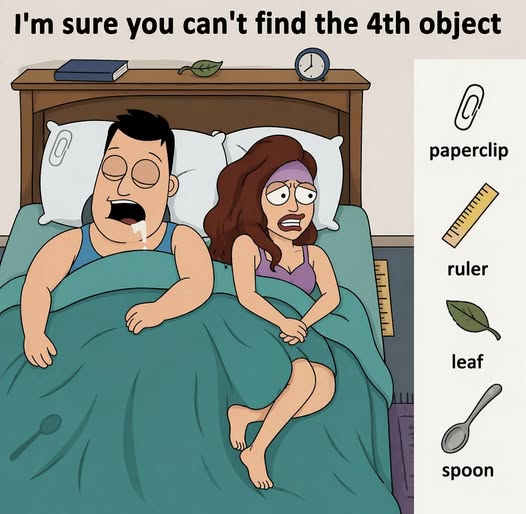
The secret to this visual puzzle isn’t sharper eyesight, but slower attention. When you return to the image with less urgency, patterns begin to break apart. What once seemed like random lines or shadows suddenly reveal themselves: the slim curve of a paperclip tucked along an outline, a ruler disguised as part of a frame, a leaf mimicking background texture, a spoon hidden within a highlight or edge.
Each object is placed where your brain “autocompletes” the scene, skipping details it assumes it already understands. That moment you finally spot the last item feels like a small shock: not because the image changed, but because you did. The puzzle quietly exposes how much of life you skim past on autopilot—and how much more you notice when you choose to truly look.