

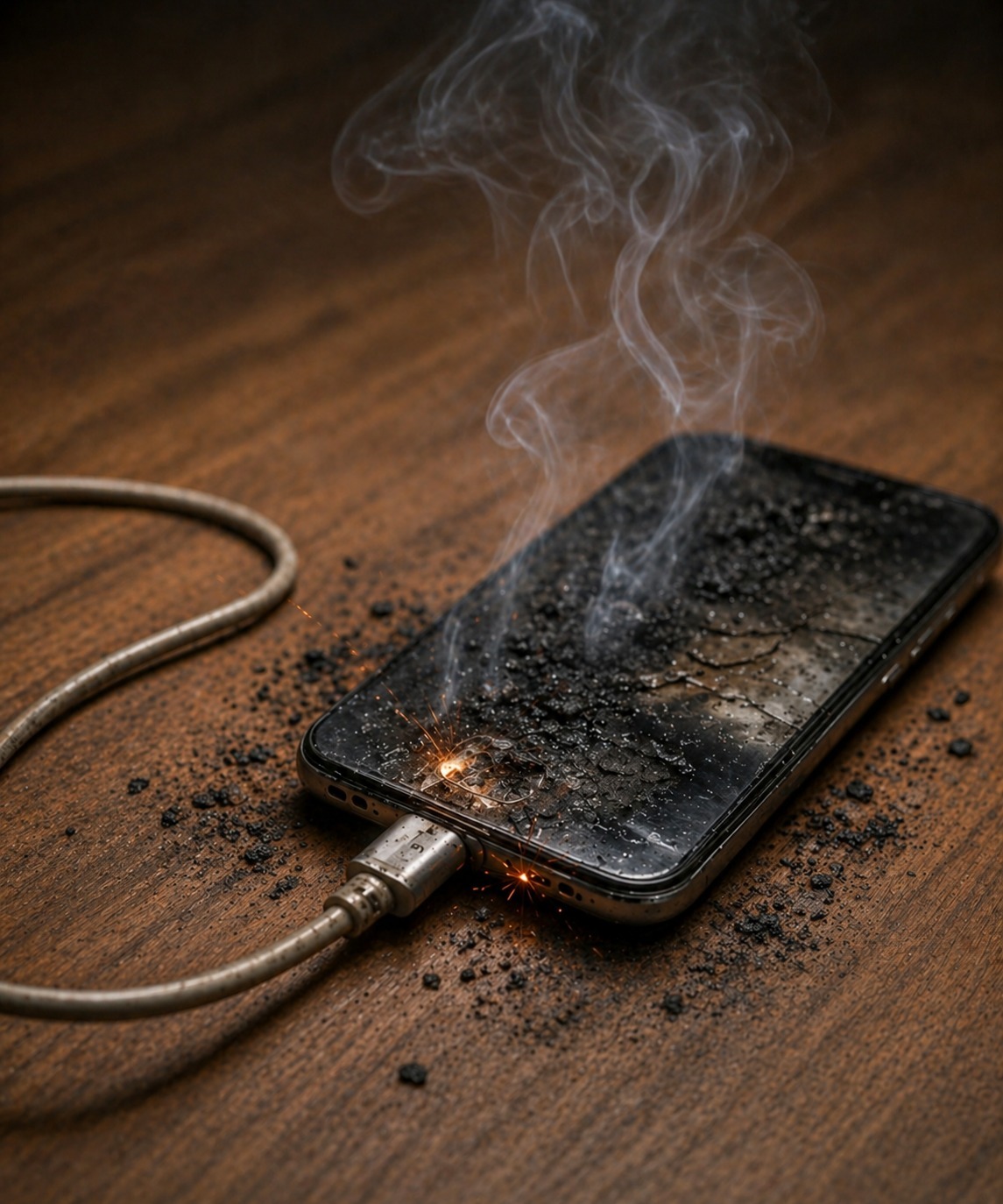
Chargers are part of daily life, powering phones, laptops, and other devices. But even though they’re common, they still involve electricity and heat, which means they can pose risks if used carelessly.
One major issue is cheap or counterfeit chargers. These often lack proper safety controls and may fail to regulate voltage correctly, leading to overheating or device damage.
Over time, this can increase the risk of sparks or fire. Using certified chargers is generally safer because they include built-in protections.
Damaged cables are another common hazard. Frayed wires or loose connectors can create short circuits, even if the charger still seems to work.
Charging habits also matter. Leaving devices plugged in for long periods or charging them on soft surfaces like beds or pillows can trap heat and increase risk.
Outlets and extension cords can also contribute to problems if overloaded or poor quality. Proper ventilation and safe electrical setups help reduce danger.
Safer practices include using certified chargers, replacing damaged cables, unplugging when not in use, and avoiding heat-trapping surfaces or water exposure.
While chargers seem harmless, good habits and reliable equipment make a big difference in preventing accidents and protecting devices and homes.