

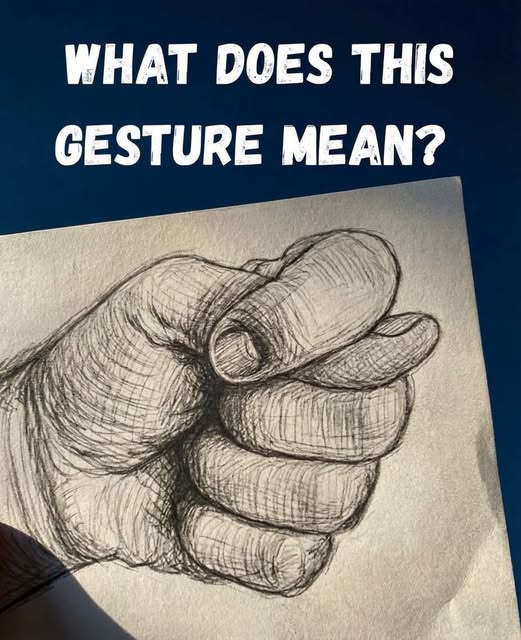
Tucked between two fingers, the hidden thumb once carried more weight than shouted arguments. The fig gesture let people say “no” without humiliation, resist without open conflict, and protect themselves with nothing but a small, knowing movement. In an age when reputation, honor, and social control ruled daily life, this tiny sign became a quiet shield—polite on the surface, powerful underneath.
As generations passed, its sharp edges softened. What began as subtle defiance turned into a shared wink within families, a private language between grandparents and children, a comforting ritual at doorways and train platforms. Even if few recognize it now, the gesture’s legacy lives in how we still try to set boundaries gently, protect what we love, and speak volumes without a single word. Its shape may fade, but the human need behind it never did.