

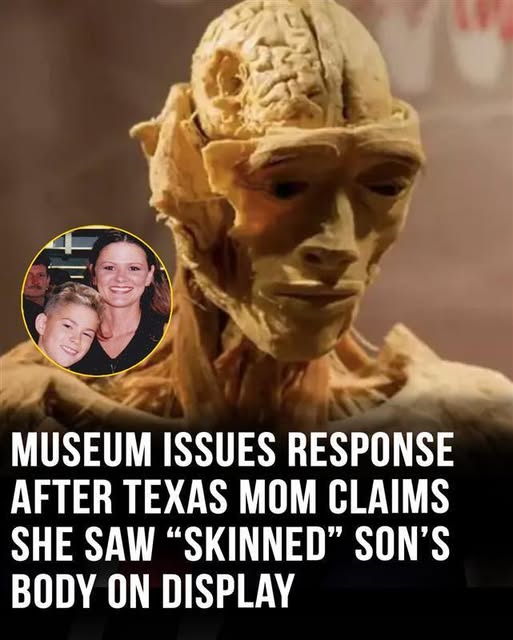
The controversy surrounding the Real Bodies exhibition stems from the unresolved grief of Kim Erick over the 2012 death of her 23-year-old son, Christopher Todd Erick. He was found dead at his grandmother’s home in Midlothian, Texas, and officials initially concluded he suffered two heart attacks linked to an undiagnosed cardiac condition. His body was cremated shortly afterward by his father and grandmother, a decision Kim says was made without her full consent. That exclusion left her feeling unsettled and searching for answers.
In 2014, after Kim raised concerns about bruising she believed she saw in police photographs, a homicide investigation was launched. However, a grand jury found no evidence of foul play and left the cause of death undetermined. With no physical remains to reexamine and lingering doubts about the circumstances, Kim struggled to find closure.
Years later, she encountered images from the touring Real Bodies exhibition, operated by Imagine Exhibitions, Inc.. One plastinated cadaver, known as “The Thinker,” struck her as bearing similarities to her son, including what she believed was a skull fracture and missing skin where he once had a tattoo. Convinced it might be Christopher, she demanded DNA testing.
The company rejected her request, stating the body had been legally sourced from China in the early 2000s—years before Christopher’s death. Archived records show the specimen on display as early as 2006, making it chronologically impossible for it to be him. Independent reviews support this timeline.
While investigators and fact-checkers consider the matter closed, the emotional dispute persists. For Kim, unanswered questions about her son’s death continue to fuel her call for transparency in the handling and exhibition of human remains.