

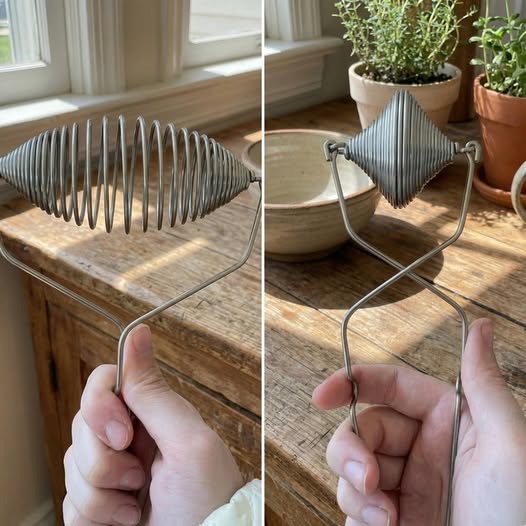
Tucked away in old kitchen drawers, the flour wand is a modest tool that reflects a time when baking was part of everyday life rather than a special occasion. Made from a simple coil of metal, it was designed to sift flour, break up clumps, and gently combine ingredients. Its purpose wasn’t speed or convenience, but control—allowing bakers to mix just enough without overworking doughs or batters.
Before electric mixers became common, tools like the flour wand were essential. Bakers relied on the feel of the mixture to know when it was ready. Overmixing could ruin texture, while undermixing caused uneven results. The flour wand struck a balance, offering resistance without aggression. Its design helped maintain the structure of batters for breads, cakes, and pastries, producing consistent results through careful, hands-on mixing.
As modern appliances filled kitchens, the flour wand gradually disappeared. It wasn’t flashy or fast, but it offered something machines often don’t: precision and restraint. For recipes that require gentle folding or minimal mixing—such as quick breads or tender cakes—the flour wand remains surprisingly effective. It’s also ideal for small batches where using a mixer feels unnecessary.
Coming across a flour wand today can feel like uncovering a forgotten chapter of baking history. Rather than discarding it, giving it new life can reconnect bakers with slower, more intentional methods. Even when rarely used, it stands as a reminder that good baking isn’t always about technology or speed. Sometimes, the simplest tools—guided by patience and touch—create the most reliable and satisfying results.