
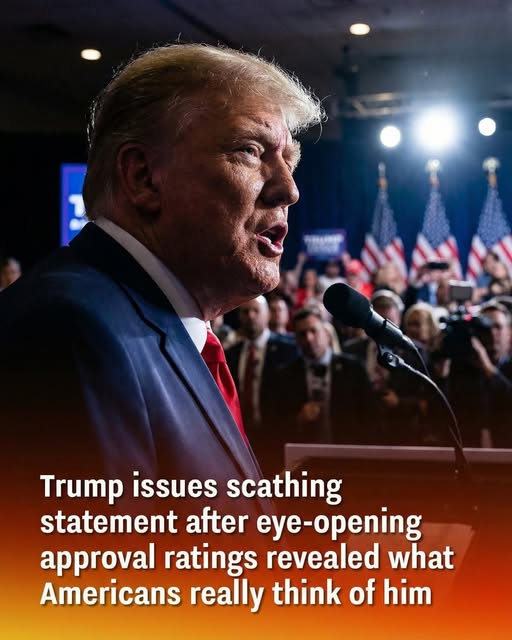
Former U.S. President Donald Trump has recently responded to new public opinion polls that measure how Americans view his leadership during his current term. Several surveys released in recent weeks suggest that his approval ratings remain mixed, with a notable portion of respondents expressing concerns about key issues such as the economy and immigration. As public discussion around these results continues, Trump has shared his perspective on the findings and the role of polling in modern politics.
According to a recent AP-NORC survey, roughly four in ten American adults said they approve of Trump’s performance so far, while a majority expressed reservations about specific policy areas. Additional polls, including one conducted by The New York Times and Siena College, revealed that many respondents feel the country is facing ongoing challenges, with fewer people reporting that conditions have improved compared to the previous year. These results highlight the divided opinions among voters and reflect broader debates about economic policy, border security, and the direction of the nation.
In response to the surveys, Trump criticized the reliability of certain polls and questioned how they are conducted and reported. He suggested that some polling methods may not fully reflect the views of his supporters and argued that media coverage often emphasizes negative results. While expressing skepticism about certain findings, Trump also pointed to other surveys that he believes show stronger levels of public support. His comments underscore an ongoing discussion about how polling data should be interpreted and how public opinion is shaped in a highly polarized political environment.
The latest polling results and Trump’s response illustrate the complexity of measuring public sentiment in today’s political climate. Opinion surveys remain an important tool for understanding voter attitudes, but they often vary depending on methodology and timing. As the administration continues to address economic and social issues, public opinion is likely to evolve. For many observers, the conversation surrounding these polls is not just about numbers, but about how leaders and citizens alike interpret feedback, communicate their views, and navigate the challenges of modern democracy.