

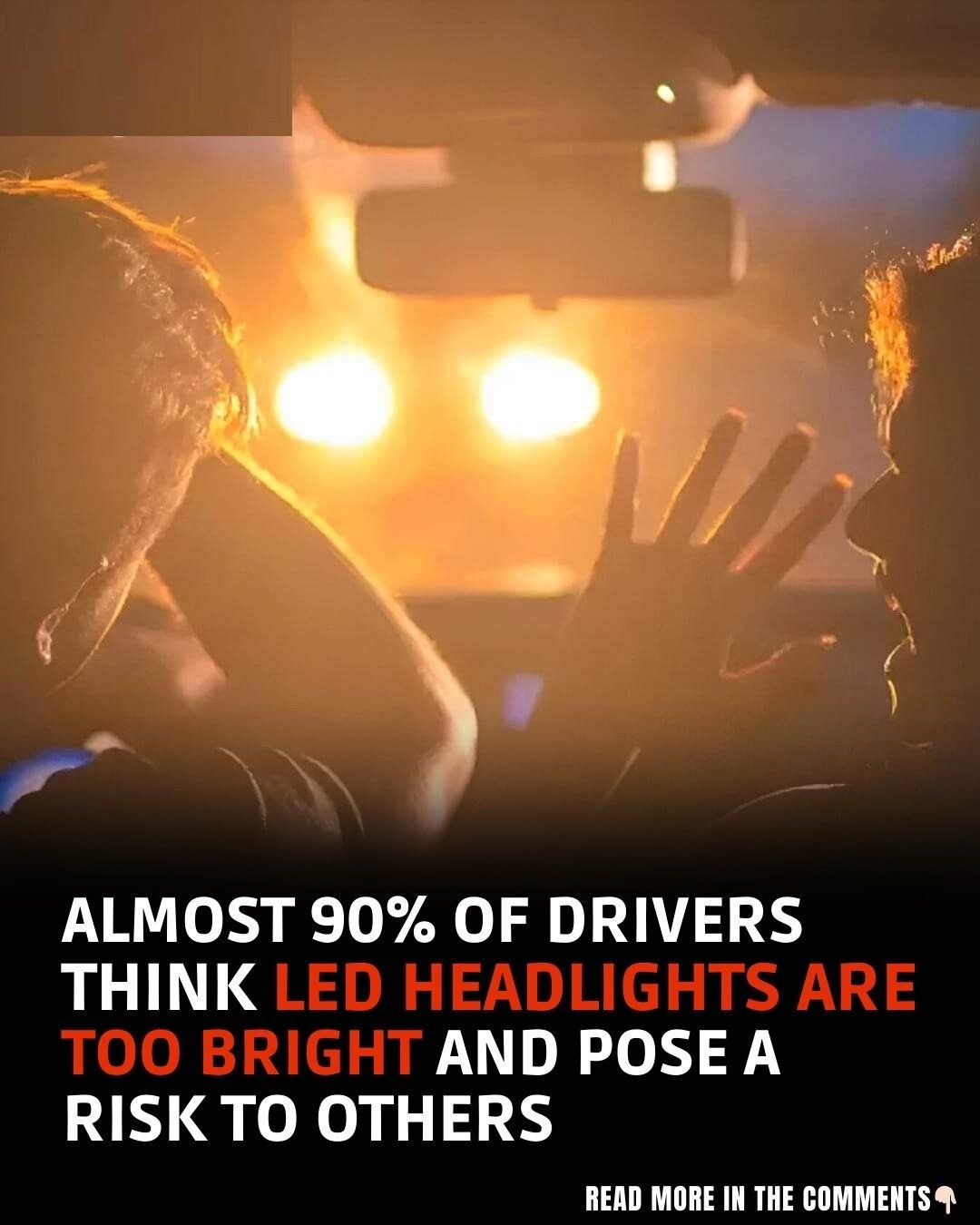
1) The Experience
“The flash hits before you can prepare for it.”
Drivers describe the sudden glare from oncoming vehicles as
“momentarily disorienting” and jarring,
forcing them to blink, grip the wheel tighter,
and rely on muscle memory while their eyes recover.
What was once occasional is now a common part of night driving.
2) Modern Lighting
Advances in headlights—LEDs and high-intensity
discharge bulbs—help drivers see farther and clearer.
But for oncoming drivers, these lights “are brighter,
cooler in tone, and more focused,”
often hitting eyes at head level, especially from SUVs and trucks.
3) Why It’s Dangerous
Even small misalignments can make glare worse.
Drivers may experience brief vision loss,
afterimages, or light streaks.
At highway speeds,
“even a short lapse in visibility can feel dangerous,
” causing sudden slowing or lane drifting.
4) Seeking Solutions
Experts question if lighting standards match real-world conditions.
Ideas like adaptive headlights and
automatic beam adjustments are gaining attention.
Brighter lights were meant for safety—
but when they blind others, “the balance is lost.”