
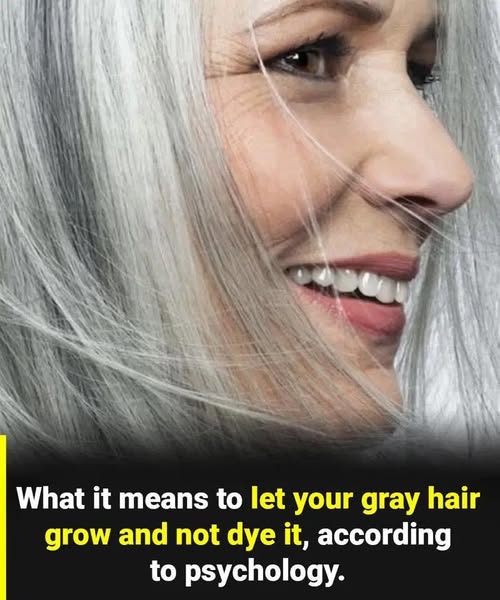
Leaving gray hair untouched rather than concealing it with dye has become increasingly common, and psychologists view this shift as deeply connected to changes in personal identity and emotional growth. For much of modern history, gray hair symbolized aging, decline, and fading relevance, shaping social expectations that equated youth with value. These beliefs encouraged people to hide signs of aging to maintain acceptance and desirability. Today, that narrative is changing. Gray hair is now often seen as a sign of authenticity, confidence, and self-assurance rather than loss. This evolving perception reflects broader cultural and psychological changes in how people understand beauty, worth, and time. What was once stigmatized is now, for many, an intentional expression of self-acceptance.
From a psychological standpoint, choosing to stop dyeing hair often marks a significant shift in self-perception. Hair is closely tied to identity and social presentation, making gray hair a visible challenge to internalized beliefs about aging. Many discover their discomfort is rooted not in appearance but in fear of judgment or invisibility. Letting gray hair show can therefore represent a redefinition of self-worth, moving away from youth-based validation toward inner alignment. Aging becomes a natural process rather than a threat.
Psychologists often frame this choice as self-affirmation. By rejecting dye, individuals communicate acceptance of their true selves, challenging cultural narratives that tie worth to youthfulness. This decision reflects autonomy and emotional maturity, replacing obligation with authenticity. It becomes an act of reclaiming control over one’s image.
Women have historically faced stronger pressure to hide aging, making this choice particularly significant. Allowing gray hair can feel like a quiet rebellion against unrealistic beauty standards that link female value to youth. Many women describe feeling relieved and liberated after letting go of dye and constant maintenance.
Men, though traditionally permitted to age more visibly, also face growing pressure to appear youthful and competitive. Choosing gray hair can represent confidence and a refusal to equate value with constant productivity. For both genders, the shift centers on self-acceptance rather than appearance-based validation.
Ultimately, embracing gray hair is about emotional freedom. It reflects a healthier relationship with aging and a rejection of shame. For many, this acceptance extends beyond appearance, fostering confidence, resilience, and a deeper sense of authenticity.