

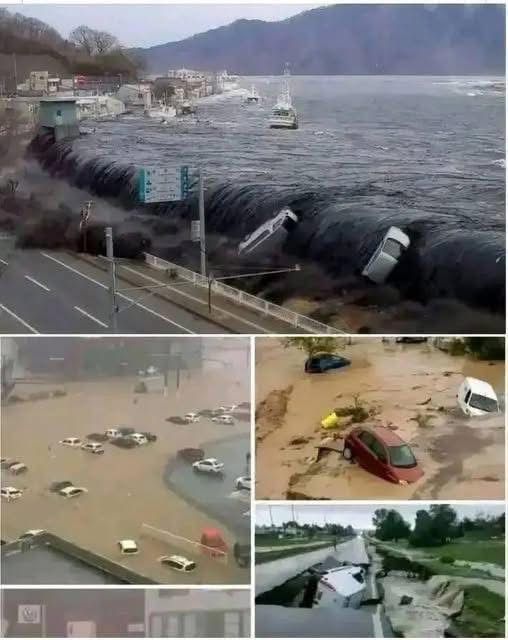
The sea did not roar. It crept in.
By the time anyone understood, it was already too late.
A quiet tremor, a vanished tide, and then — streets turned to rivers, homes to driftwood, memories to debris.
They remembered that morning not for thunder or storm clouds, but for the stillness.
The air felt wrong, the tide pulled back too far, and a deep, rolling shudder moved through the earth.
Within hours, Hirosato’s familiar streets dissolved beneath a churning, mud-brown surge that carried cars, boats, and whole rooms as if they were scraps of paper.
People clung to rooftops and trees, listening to the sound of their town being torn apart, powerless to stop it — but not powerless to save one another.
In the days that followed, the silence after the water receded was almost unbearable.
Yet in that silence, hands reached out. Neighbors became rescuers, strangers became family, and a gymnasium became the beating heart of a broken town.
Hirosato rebuilt not by forgetting, but by weaving loss into a new identity:
one that honored the dead, protected the living, and treated the sea not as a monster, but as a force to be respected.
Survival, they learned, was more than breathing — it was choosing, again and again, to begin.