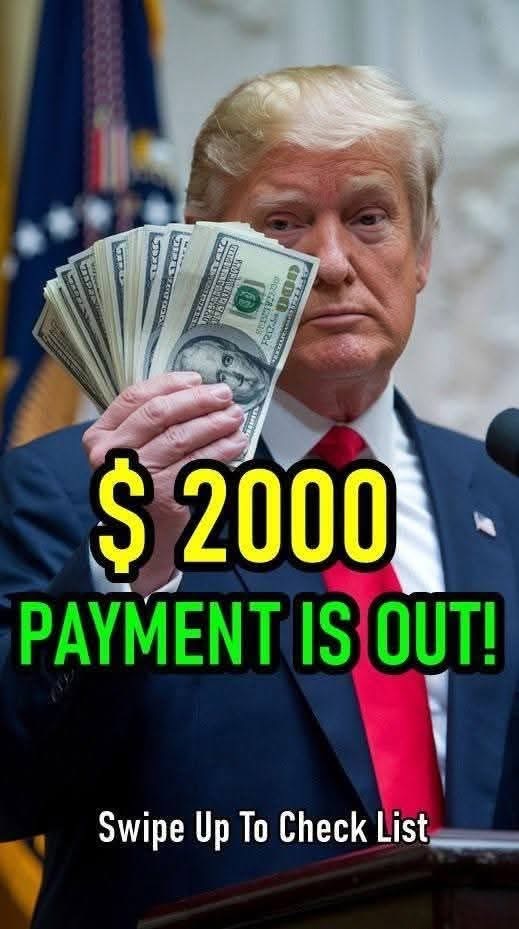

The promise hit like a lightning strike.
Donald Trump says every eligible American could get a $2,000 “dividend” funded by tariffs on foreign imports.
Supporters call it genius. Critics warn it’s economic Russian roulette.
No one really knows who’s right—or how the money would actually be delivered.
Trump’s proposal to fund a nationwide dividend through tariffs taps directly into anger over globalization and economic inequality.
By vowing at least $2,000 per person, excluding high-income earners, he frames the plan as a direct payback to “forgotten” Americans and a way to make foreign producers foot the bill.
To many, it sounds like a simple, almost poetic reversal of decades of offshoring and trade deficits.
But behind the emotional punch, the mechanics are murky.
Tariffs are paid first by importers and often passed on to consumers through higher prices, effectively becoming a hidden tax.
Whether the revenue could reliably cover such massive payments—and how they’d be distributed, via tax rebates, checks, or credits—remains unanswered.
The plan isn’t just a policy idea; it’s a political test of whether voters are driven more by economic frustration and hope than by hard math and long-term risk.